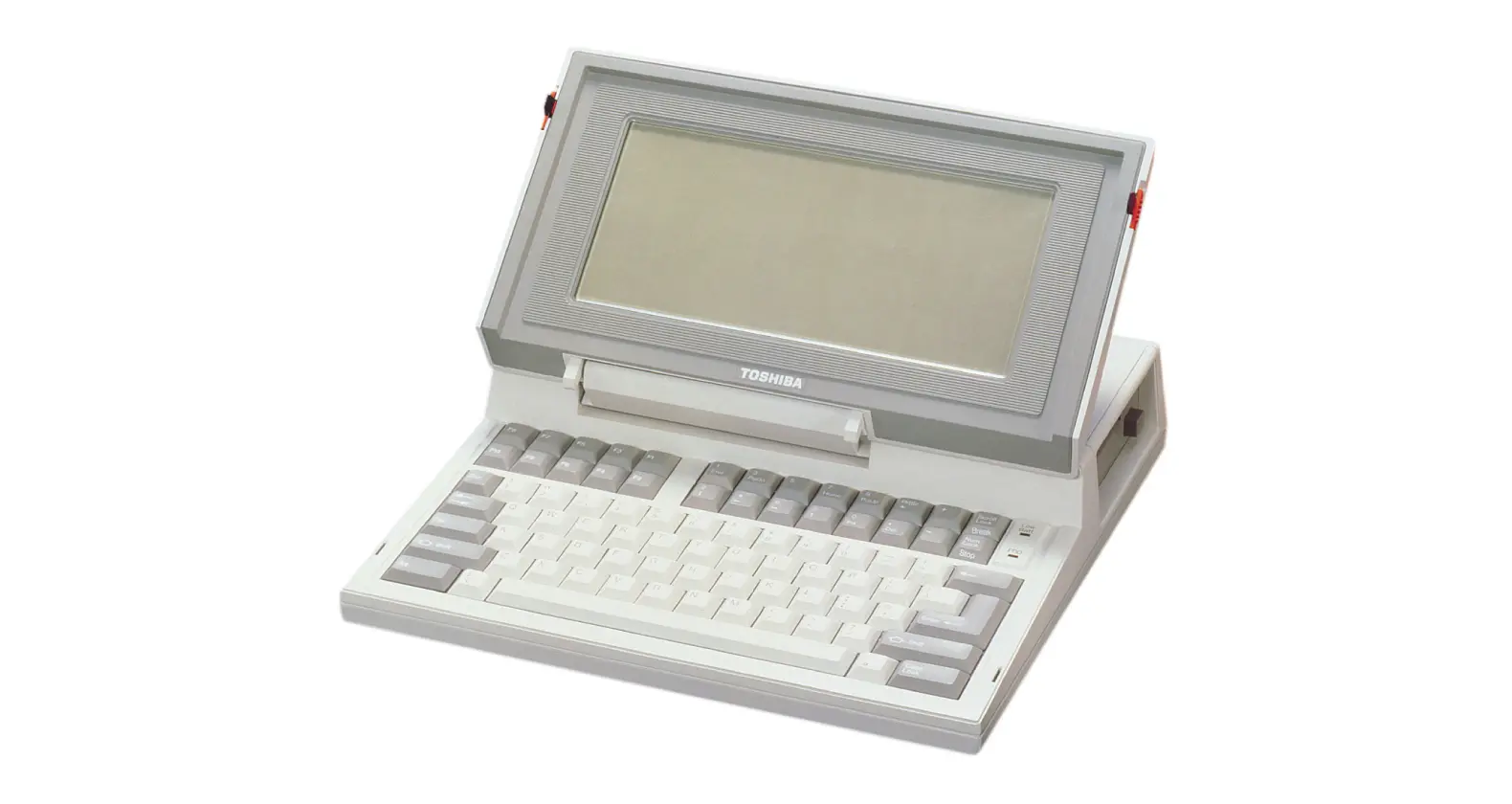
Episode 1
The Birth of the World’s
First Commercial Laptop

In the 1980s, the predecessor company of Dynabook Inc., Toshiba, faced a critical turning point in its computer business division. Facing tough competition in the booming desktop PC market, the team realized that survival depended on creating a revolutionary product unlike anything ever seen before. Market research revealed a key insight: computers were simply “too big.”
This challenge is linked to the vision of American computer scientist Alan Kay, back in 1972. He had a vision of a “dynamic book” a small, portable computer resembling today’s tablets and smartphones. The team were inspired by this idea and adopted a bold idea: “While others focus on the desktop, we’ll focus on the 'lap'.” Thus began the development of the world’s first commercial laptop PC.
The driving philosophy was to shift away from the norm of people going to where computers were and instead create intelligent tools that stay close to people. Naming the product “Dynabook” was a daring move, met with some scepticism, but it had the blessing of Alan Kay himself. Upon receiving the first model in Boston, Kay reportedly signed it with “Congratulations!” and praised the effort, saying, “It’s still far from the original vision, but you’ve done well.”
Due to trademark issues, the name “Dynabook” was initially only used in Japan. A company with the same name already existed in the U.S., and acquiring the rights was challenging. However, over time, the trademark was secured in various markets and Dynabook grew into a globally recognized brand.
Dynabook’s history of proposing a new way of working—where PCs move with people—is the very history of laptop PCs. For more than 40 years, Dynabook has continued to pioneer mobility and innovation by creating devices that move with people and help shape the way the world works, learns and connects.