

Episode 2
Turning the Impossible into Reality -
The Challenge of Miniaturization
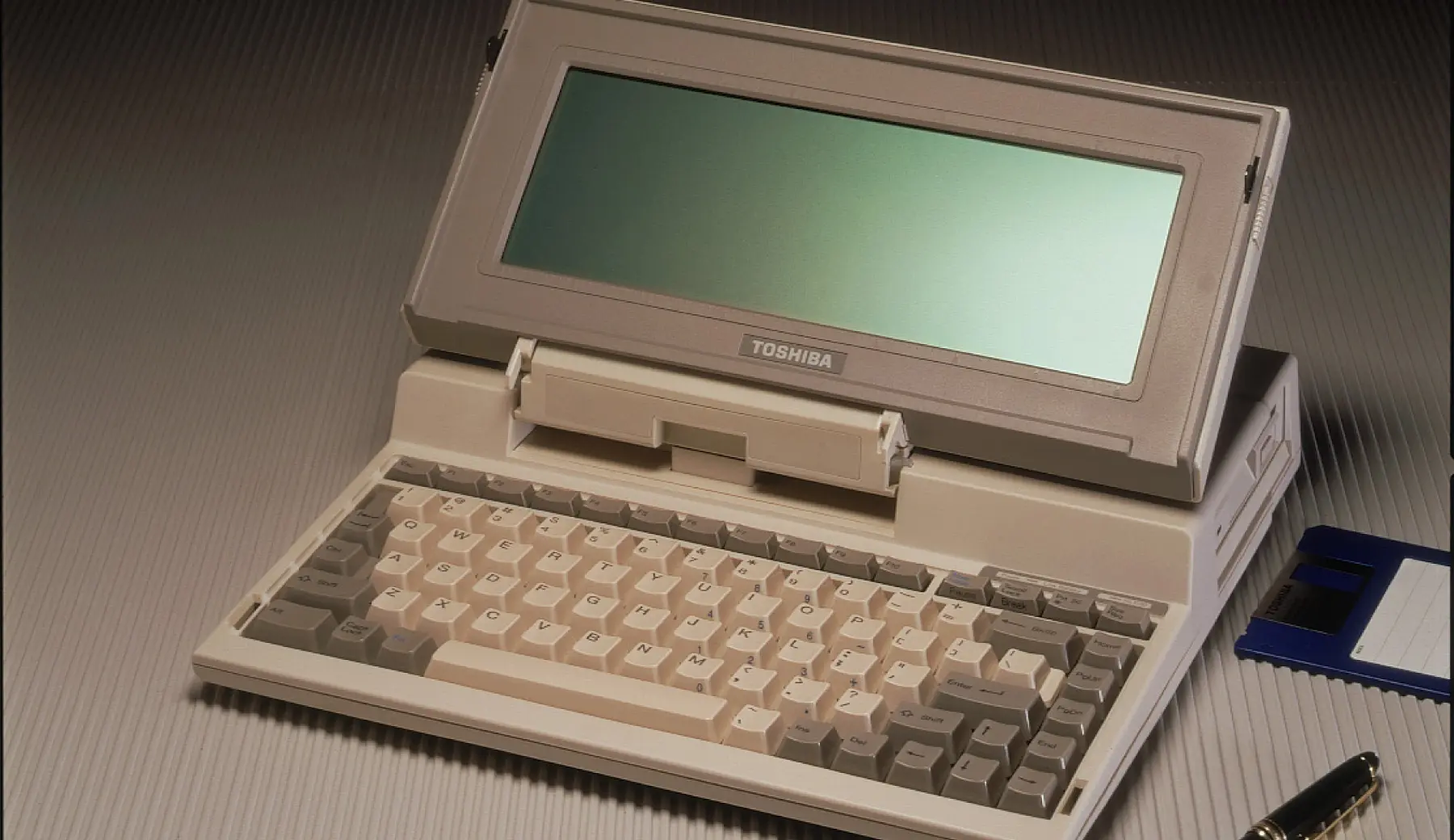
The world’s first commercial laptop PC, the T1100, began as an experiment few believed could work. However, the development team believed, "If 90% oppose a project, it will succeed. If 90% support it, it won’t sell. That’s why this product will succeed." They began development without the approval of their headquarters’ and even funded the project themselves.
The biggest challenge was miniaturization, by reducing the size to less than one-tenth of a desktop PC while maintaining performance. At the time, mainstream components like 5-inch floppy disks and CRT displays were far too large for portability, forcing engineers to rethink every aspect of the design.
To address this, the project leader defined the ideal portable design and directed engineers to fit all the necessary components within it. This demanding approach left no room for compromise. The team, mostly experts in electronic circuit design rather than PC veterans, had the skills essential for miniaturization.
Success required collaboration across departments.
Years earlier, the team leader had begun cultivating talent in LSI and packaging technologies, which proved to be invaluable. Working closely with the semiconductor division, engineers replaced traditional circuits with LSIs, reducing the component count by 80%, cutting costs and lowering power consumption. They also adopted the then groundbreaking 3.5-inch floppy disk, which later became an industry standard.
This fearless commitment to miniaturization and collaboration laid the foundation for Dynabook’s ongoing innovation, proving that when others see limits, Dynabook sees opportunity.